FAQs
Q: What does the 1-year warranty cover?
A: Our comprehensive 1-year warranty covers manufacturing defects in both the medical-grade mattress and the pump system. This includes issues with the alternating pressure cycles, pump motor failure, and material flaws. Please note that normal wear and tear or damage from improper use (such as punctures from sharp objects) is not covered.
Q: How do I use the adjustment knobs on the pump?
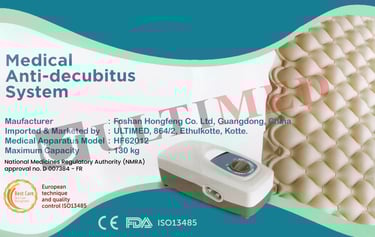
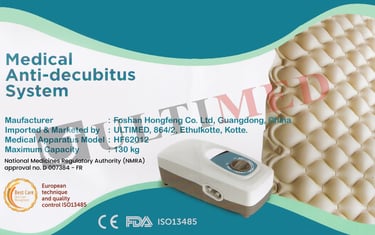
A: The comfort adjustment knobs allow caregivers to customize the mattress firmness based on the patient's weight and individual comfort needs. Simply turn the dial to increase or decrease the internal air pressure.
Q: Is ULTIMED approved by the National Medicines Regulatory Authority (NMRA)?
A: Yes. At ULTIMED, we prioritize patient safety. Our anti-decubitus systems are registered and approved by the National Medicines Regulatory Authority (NMRA) of Sri Lanka, ensuring they meet strict national standards for medical device quality, safety, and performance. In addition this product is approved by CE,ISO and FDA quality management system.
Q: How does islandwide delivery work?
A: We offer reliable islandwide delivery across Sri Lanka through courier service to your door step to ensure that critical care equipment reaches you no matter where you are located. Most orders are processed and delivered within 3–5 business days.
Q: What after-sales services do you provide?
A: We are committed to long-term care. Our after-sales service includes technical support for pump setup, troubleshooting assistance via phone or video call, and access to spare parts if needed. If you encounter any technical issues after purchase, our dedicated team is available to ensure your system continues to operate at peak efficiency.
Q: Does ULTIMED provide technical support after the 1-year warranty expires?
A: Yes. Our after-sales service extends beyond the warranty period. We offer long-term technical assistance, including troubleshooting, pump repairs if possible.
Q: How do I choose the right setting on the adjustment knob for a heavy patient?
A: For heavier patients, turn the knob clockwise toward the "Max" or higher weight setting. This provides a firmer surface that ensures the patient is properly suspended and the pressure is effectively redistributed across the air cells.
Q: How do I claim warranty service?
A: Contact our after sales service team with your purchase details and issue description.
Q: What voids the warranty?
A: Damage from misuse or unauthorized repairs voids the warranty.
Q: What does warranty cover?
A: The warranty covers defects in materials and workmanship under normal use.
Q: Are repairs free during warranty?
A: Yes, repairs covered by warranty are free of charge.
Q: Can I extend the warranty period?
A: Currently, Ultimed does not offer warranty extensions beyond the initial one year.
Q: Why is NMRA approval important for an anti-decubitus system?
A: Approval from the National Medicines Regulatory Authority (NMRA) confirms that our systems meet the safety and efficacy standards for medical devices in Sri Lanka. This ensures the pressure redistribution technology and materials are clinically validated to prevent tissue necrosis and bedsores without compromising patient safety.
Q: Can I use the mattress 24/7, and what happens during a power outage?
A:Yes, these mattresses are designed for continuous 24-hour operation. In the event of a power outage, advanced models often feature a "short-term pressure hold" or cell-on-cell design that prevents the patient from "bottoming out" (touching the bed frame) for several hours.
Q: How often should I clean the mattress and the pump?
A: For optimal hygiene, we recommend a weekly wipe-down of the mattress surface with a mild detergent and a damp cloth. Ensure the pump remains dust-free by storing it in a clean area, and inspect the air hoses monthly for any leaks or cracks to maintain consistent pressure relief.
Q: Does the mattress need to be switched off at night?
A: No. Our anti-decubitus systems are designed for 24/7 continuous operation. Turning the pump off,stops the alternating pressure cycles, which can lead to rapid skin breakdown in bedridden patients. Only power off the unit for cleaning or essential maintenance.
Q: How do I know if the pressure setting is correct for the patient?
A: Use the adjustment knobs to align with the patient’s weight. By decreasing the value of the adjustment knob,you could reduce the hardness of the bubbles.
Q: Can I place a bedsheet over the alternating pressure mattress?
A: Yes, but we recommend using only thin, breathable cotton sheets. Avoid using heavy quilts or multiple layers of padding between the patient and the mattress, as this can interfere with the pressure redistribution technology.